Solo Overland Recovery Gear: Your Lifeline
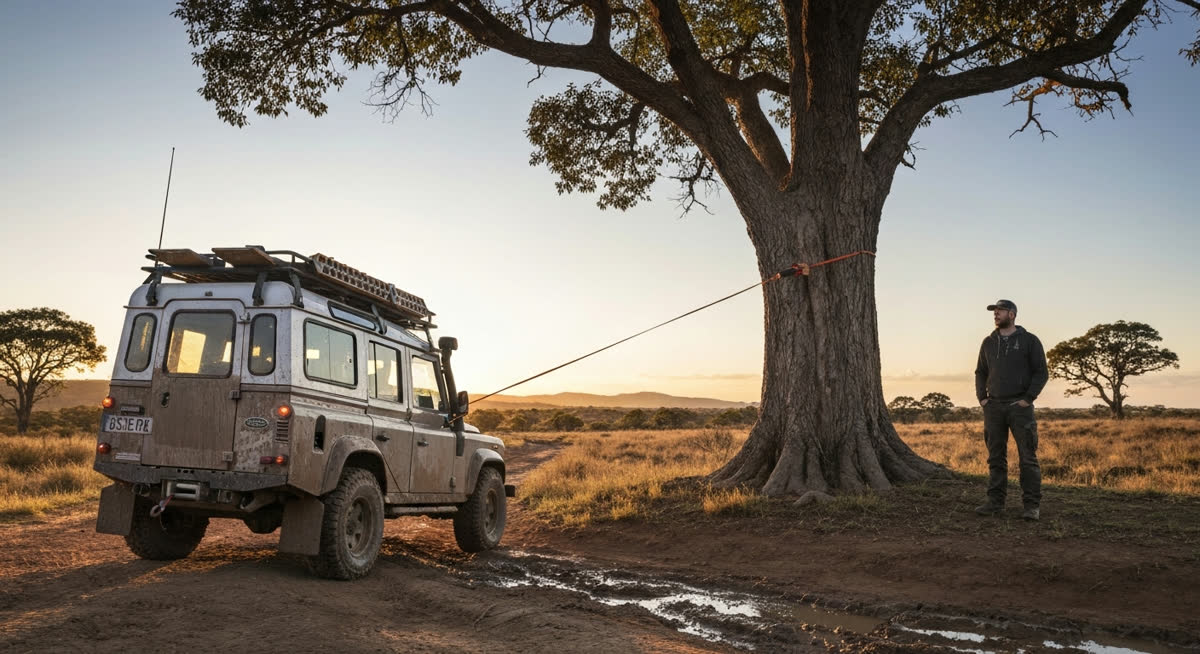
The sun dips below the horizon, painting the sky in fiery hues, and you're miles from anywhere, deep in the backcountry. Suddenly, the trail gives way, your tires churn, and your rig—your home on wheels—is hopelessly stuck. In that moment, with no one else around, what saves you? It’s your solo overland recovery gear, meticulously chosen and expertly packed. This isn't just about getting unstuck; it's about self-reliance, safety, and the true spirit of adventure that pulses through every Defender Trophy enthusiast.
For those of us who chase horizons alone, preparedness isn't a suggestion; it's a creed. That's why having the right recovery gear that actually saves you is paramount. Let's dive into the non-negotiables: winches, traction boards, and the critical kit list that will get you out of even the stickiest situations.
What are the Best Winches for Solo Overland Travel?
A good winch is the ultimate lifeline for solo overlanders, providing reliable pulling power when no other vehicle is around. When choosing one, think capacity, rope type, and reliability. For most mid-size SUVs and full-size trucks, a winch with a pulling capacity of at least 1.5 times your vehicle’s Gross Vehicle Weight Rating (GVWR) is recommended.
Electric winches are the most common choice for overland travel due to their ease of use and powerful motors. Brands like Warn, Smittybilt, and ComeUp consistently rank high in performance and durability. The Warn VR EVO 10-S is a popular choice, offering a 10,000 lb pull rating, IP68 waterproofing, and a synthetic rope option. It's praised for its reliability and fast line speed. Another solid contender is the Smittybilt X2O Gen3 10K, known for its powerful 7 HP motor, IP68 sealing, and often includes a wireless remote, making solo operations safer.
Synthetic Rope vs. Steel Cable: Which is Better?
This is an easy one for modern overland builds: synthetic rope is almost always the superior choice. It's significantly lighter than steel cable, making it easier and safer to handle, especially when you're alone. Synthetic rope also doesn't store as much kinetic energy as steel, drastically reducing the dangerous "snapback" effect if it breaks. This makes a synthetic line far less likely to cause serious injury or damage in the event of a failure.
While synthetic rope requires more care in terms of UV exposure and abrasion protection, its safety and user-friendliness on the trail are undeniable. Always pair your synthetic line with a hawse fairlead to prevent damage.
Essential Winch Recovery Accessories
A winch is only as good as the accessories that support it. Here's what you absolutely need:
- Tree Saver Strap: A non-elastic strap used to anchor your winch line to a tree without damaging the bark. Essential for responsible off-roading.
- D-Ring or Soft Shackles: For secure connections between your winch line, tree saver, and vehicle recovery points. Soft shackles are lighter and safer with synthetic rope.
- Snatch Block (Pulley): This allows you to double your winch's pulling power or change the direction of your pull, invaluable for complex solo recoveries.
- Winch Dampener: A heavy blanket or specialized dampener placed over the winch line to absorb energy if the line breaks, minimizing whip-back.
- Heavy-Duty Gloves: Protect your hands from burrs, abrasion, and rope burn.
How Do Traction Boards Work and Which Ones are Best?
Traction boards, also known as recovery boards or sand ladders, are arguably the fastest and simplest recovery tool for solo travelers, especially in sand, mud, or snow. They provide a rigid, high-grip surface for your tires to engage, bridging the gap between your stuck vehicle and firm ground.
When your tires spin, they often dig deeper. Traction boards prevent this by giving your wheels something solid to bite into. You simply wedge them under your stuck tires, engage low range, and gently apply throttle to drive out.
Top Traction Board Brands and Features
Quality matters here; flimsy boards can break and leave you worse off. Look for durable, UV-stabilized nylon composites with aggressive tread patterns.
- MAXTRAX MKII: Considered the gold standard, these Australian-made boards are renowned for their durability, 9,900 lb capacity, and excellent grip. They feature six handles and can double as a shovel.
- ARB TRED Pro: Another premium option, the TRED Pro boards are known for their strong resin construction, directional tread, and ergonomic shovel feature.
- X-BULL Gen 3.0: A popular budget-friendly option that still offers good performance for most recovery situations.
For solo travel, consider carrying at least two, but ideally four, boards for maximum versatility, especially if you're tackling deeply rutted terrain.
The Ultimate Solo Overland Recovery Kit List
Beyond winches and traction boards, a comprehensive recovery kit covers a multitude of potential mishaps. This is the gear that truly empowers you to be self-sufficient:
- Shovel: An indispensable tool for clearing mud, sand, or snow from around your tires and chassis. A sturdy, full-size shovel or a high-quality folding shovel is essential.
- Hi-Lift Jack (or Bottle Jack): A versatile tool for lifting your vehicle to change a tire, clear obstacles, or even use as a manual winch in a pinch. If using a Hi-Lift, ensure you have appropriate lifting points on your vehicle (rock sliders, heavy-duty bumpers) and understand its inherent dangers. Always use a Hi-Lift Off-Road Base on soft ground and never work under a vehicle supported only by a Hi-Lift. A sturdy bottle jack with a large base can be a safer alternative for tire changes.
- Tire Repair Kit & Air Compressor: Punctures happen. A good tire plug kit (like the ARB Speedy Seal II) and a reliable portable air compressor are crucial for trailside repairs and re-inflating after airing down.
- Kinetic Recovery Rope/Strap: Unlike a static tow strap, a kinetic rope stretches and uses its stored energy to smoothly pull a stuck vehicle, reducing shock loads on both rigs. While primarily for vehicle-to-vehicle recovery, it's a good multi-use item to have.
- First Aid Kit: A comprehensive kit is non-negotiable. Ensure it's well-stocked for trauma, minor injuries, and personal medications.
- Communication Devices: When solo, reliable comms are your safety net. A satellite messenger like the Garmin inReach Messenger Plus provides two-way satellite messaging and SOS capabilities, even far beyond cell service. A good UHF/VHF radio, like the Icom IC-2730A, can also be invaluable for local communication with other overland travelers or emergency services if you're in range.
- Basic Tool Kit & Spare Parts: A well-organized kit with wrenches, sockets, zip ties, duct tape, and spare fluids can fix many minor issues before they become recoveries.
- Fire Extinguisher: Mount it accessibly. Electrical fires or grass fires can escalate quickly.
- Navigation: Beyond your phone, a dedicated GPS unit and physical paper maps are vital backups.
Building your solo recovery kit is an ongoing process. Every trip teaches you something new, reveals gear deficiencies, or refines your techniques. Don't just buy the gear; learn how to use it safely and effectively. Practice your winching scenarios, experiment with traction boards, and understand the limitations of your equipment and your vehicle.
For those who love their Land Rover Defender, Range Rover, or any classic 4x4, sharing your builds, routes, and expedition stories with a passionate community can elevate your adventures. Join the Defender Trophy community to connect with fellow gearheads, swap recovery tips, and get advice from seasoned overlanders who understand the unique demands of solo travel.
In the vast expanse of the wild, your preparation is your partner, and your recovery gear is your steadfast friend. Trust in your kit, trust in your skills, and keep exploring.
The best recovery gear isn't just about what you carry, but how confidently and competently you wield it when the trail demands everything you've got.
Join the Defender Trophy community — share your build, find routes, meet the tribe.
Join the Community